Purple Inkwell Studios
An Illustrated Horror Novella
42,242 Words
Eleven-year-old Emily is quiet, observant, and accustomed to noticing the things other people overlook.
When a strange carnival appears in the field near her home, it seems to offer everything the ordinary world does not.
Then Emily sees what happens behind the performance, and begins to understand what the audience is really paying for.
Step Inside
The carnival looks harmless from the outside.
Lanterns glow. Music drifts across the field. People laugh, buy sweets, play games, and gather beneath the lights. But Emily begins to notice the children behind the performance, and the audience that keeps asking for more.
No coins required.From the Midway
Only attention.
Read the Book
Emily and Apple
Emily talked to Apple when the house was quiet. Not because Apple answered, but because she listened in a way that felt different from silence. Apple’s button eyes had dulled over the years, and the thread at her smile loosening just slightly, but Emily liked her that way. It meant time had passed, and neither of them had gone missing because of it.
Emily was tall for eleven. Too tall, she thought, the way giraffes must feel when they wear sneakers. Her legs always seemed to arrive before the rest of her, and her sleeves never stayed where they were meant to. She had learned early how to fold herself smaller, how to take up just enough space without inviting comment.
Apple fit perfectly into the pocket of her jacket.
Emily’s father said she had her mother’s height. He said it carefully, as if the words were made of glass. Her mother had died when Emily was born, and the story lived in the house like a closed door no one opened unless they had to. Emily didn’t remember her, but she remembered the way her father paused whenever her name was spoken aloud, as though something important had almost been said and then thought better of.
Apple had been her mother’s gift.
Not given. Not exactly. Waiting.
For years Apple sat on a high shelf in the living room, watching Emily grow into herself from above. Emily had wanted to hold her long before she was allowed to. When she asked, her father always said the same thing.
“When you’re ready.”
Emily didn’t know what that meant. She only knew that when she finally held Apple at six years old, the waiting stopped feeling sharp.
Now Apple went everywhere she could without being seen. School was not one of those places. Emily had learned that lesson quickly. But mornings were safe. Mornings belonged to them.
Apple never asked Emily to explain herself. She did not misunderstand. She did not correct. She stayed.
Emily sat on the edge of her bed and whispered, “Apple, I think it’s time for us to go on another adventure.”
Apple did not move, which Emily took as agreement.
The light coming through the window was pale and violet, filtered by curtains so thin they looked like they might drift away if the wind decided it. Emily liked that hour best. The world felt undecided then, as if it hadn’t quite chosen what kind of day it was going to be.
She was just tucking Apple back into her pocket when she noticed the movement outside.
Something had landed on the branch just beyond the glass.
Emily held very still.
Some things, she had learned, only stayed if you didn’t rush them.
The bird was unlike anything she had seen before. Its feathers shifted colors when it moved, not brightly, not proudly, but as though the light itself couldn’t decide what to do with it. Its eyes were dark and alert, fixed on Emily with an attention that felt deliberate rather than curious.
The bird tilted its head.
Emily tilted hers back.
They regarded one another through the glass, two creatures deciding whether the other was real.
The bird opened its beak and dropped something onto the sill.
A small weight struck the wood with a soft, final sound.
Then the bird was gone.
Continue Chapter One
Emily waited longer than she thought necessary before moving. She slipped off the bed and crossed the room on quiet feet. The house did not protest. Her father was already gone to work, the kitchen left exactly as it always was, clean and careful, as if order might hold something fragile together.
On the sill lay a folded piece of parchment, tied with red string.
Emily did not touch it at first.
She had learned that important things announced themselves in the body before they reached the mind. Her stomach felt hollow, not with fear, but with anticipation, the way it did before a storm broke or a secret was told.
“Apple,” she whispered. “Do you see it?”
Apple saw everything.
Emily untied the string slowly and unfolded the parchment. The paper was thick and warm, as though it had been held close for a long time. The ink was dark and each letter seemed to be formed with care.
You are invited.
The carnival will arrive today.
That was all.
No name. No signature.
Emily stared at the paper a second longer than felt necessary.
She lifted it carefully and pressed it, just barely, to the bridge of her nose. Not enough to crease it. Just enough to hope. She wasn’t sure what she expected to find there. The sweet burn of popcorn. The sharpness of metal and grease. Sugar spun thin as breath. Something loud and impossible that would prove the words were real.
The paper smelled of nothing at all.
Only itself. Warm. Clean. Patient.
Emily lowered it and looked back toward the window, her eyes searching the branches beyond the glass. She half expected the bird to still be there, feathers shifting in that undecided way, watching her as though it had not quite finished its task. But the branch was empty. The air was ordinary. No wings cut across the light.
No music followed.
No scent lingered on the page.
For a moment, disappointment flickered through her, quick and bright. Then something steadier took its place. The absence felt deliberate. As though the invitation had already given everything it meant to give, and anything more would have been too much.
Emily held the paper against her chest, feeling its warmth through her shirt.
She read it twice, then a third time aloud, testing the words to see if they changed. They did not.
She folded the note again and looked out the window. The street was the same as it had always been. The tree across the way stood patiently in its place. Nothing in the world seemed aware that an invitation had been issued.
Emily felt, very suddenly, that it was meant for her.
The feeling came with a quiet understanding, too that whatever this was, it would not arrive all at once, and that rushing it would make it disappear.
Not because she was special. She knew better than that. But because something had noticed her silence.
She slipped it into her pocket. It rested there, warm against her leg, heavier than paper had any right to be.
She stood very still, struck by the strange certainty that something had changed without making a sound. The room looked the same. The light remained undecided. But the quiet felt different now, as if it were paying attention back.
Emily did not like that thought. She pushed it away and went downstairs.
The rest of the morning passed carefully. Emily ate her cereal, tied her shoes, checked the clock. The invitation did not disappear. It waited in her pocket, warm against her leg.
When she stepped outside, the air felt different. Not colder or warmer. Just expectant.
That was when she saw the velvet bag.
It hung from the lowest branch of the willow tree at the edge of the yard, swaying slightly, as though it had just been placed there. The fabric was deep purple, soft enough to drink in the light. A small brass clasp held it shut.
Emily approached it slowly.
She knew, without knowing how, that it was not meant for anyone else.
She opened the bag.
Inside lay a key.
It was heavier than it looked, cold and solid in her palm. The metal was dark, worn smooth by use. It did not match any lock Emily had ever seen.
Emily closed her fingers around it and felt the shape settle there, as though it had been waiting for her hand.
She did not try to use it.
Some things, she understood, were not meant to be tested immediately.
Emily slipped the key back into the velvet bag and tucked it into her jacket, next to Apple. She pressed the bag flat with her palm, as if smoothing something skittish.
“This is ours,” she whispered to Apple, and did not feel the need to explain further.
The willow leaves stirred overhead, whispering to one another.
From somewhere far away, faint but unmistakable, came the sound of music.
Emily stood very still and listened.
And though she did not yet know what the day would ask of her, she understood one thing with perfect clarity.
The carnival had come, and it had noticed her watching.
The carnival is only beginning.
The Story
Something has noticed Emily.
Emily has always been more comfortable observing the world than trying to explain herself to it.
Apple, the worn stuffed rabbit her mother gave her, has been beside Emily for as long as she can remember.
Then one morning a strange bird appears outside her bedroom window and leaves behind an invitation. A velvet bag follows. Then a key. Then a small wooden carousel.
By evening, the carnival has appeared in the field beyond her home.
Inside, the lights are warm and the midway is alive with music. Ringmaster Francesco welcomes Emily as though her arrival was expected.
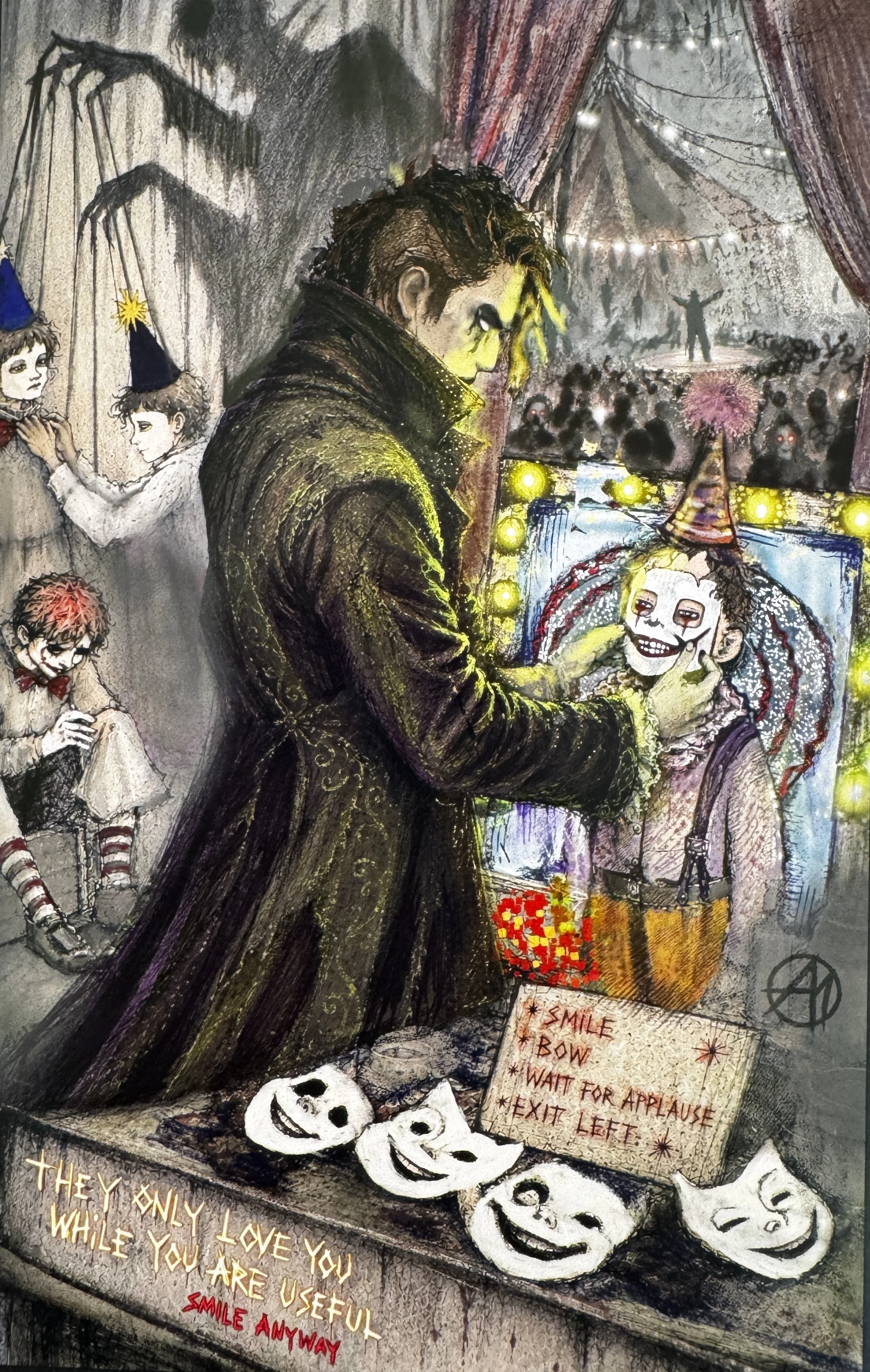
But behind the curtains, the children performing for the crowd are exhausted, frightened, and expected to keep smiling.
The deeper Emily moves into the carnival, the harder it becomes to separate watching from participating.
Original Artwork
From the world
of the carnival.
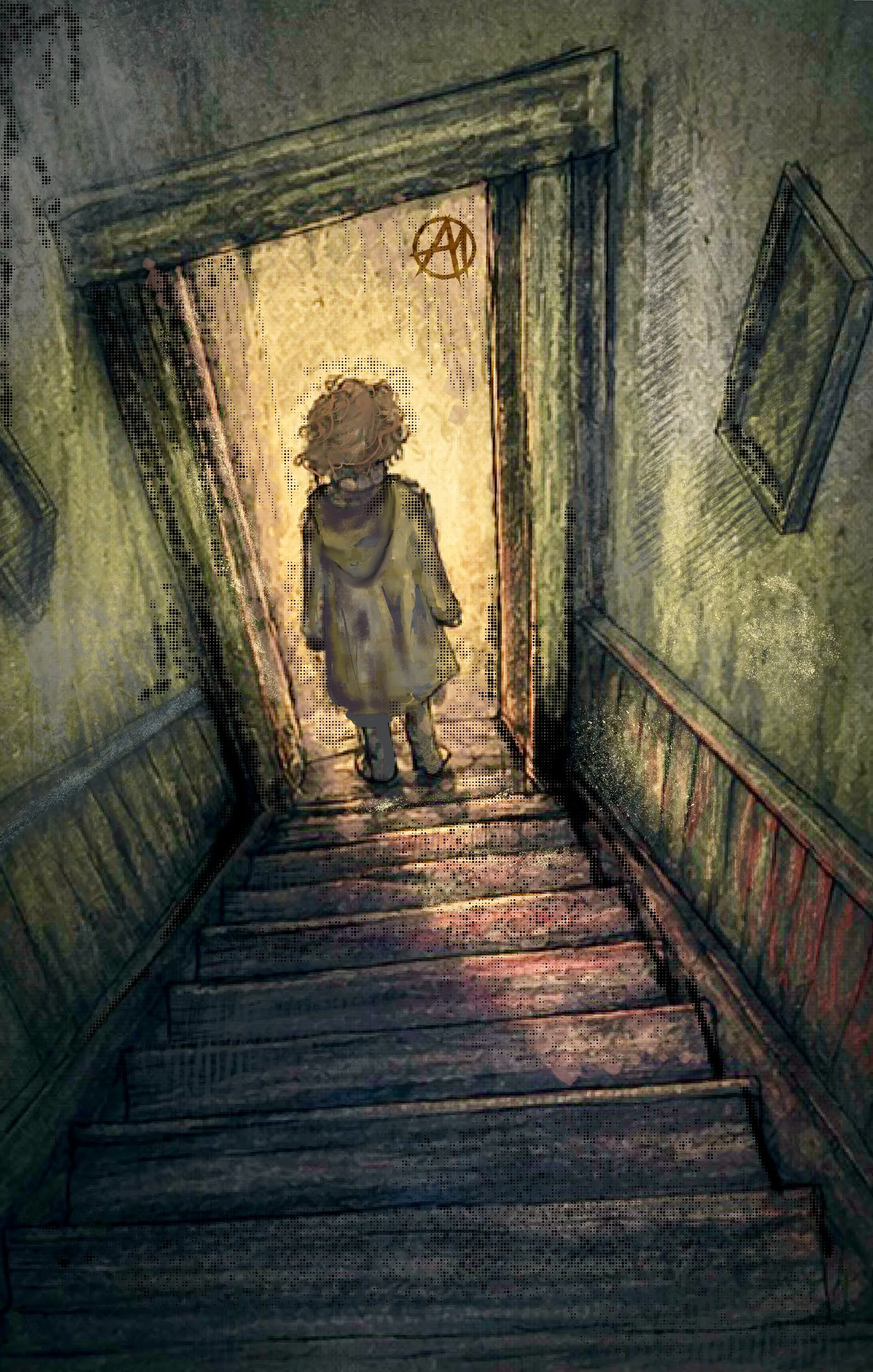
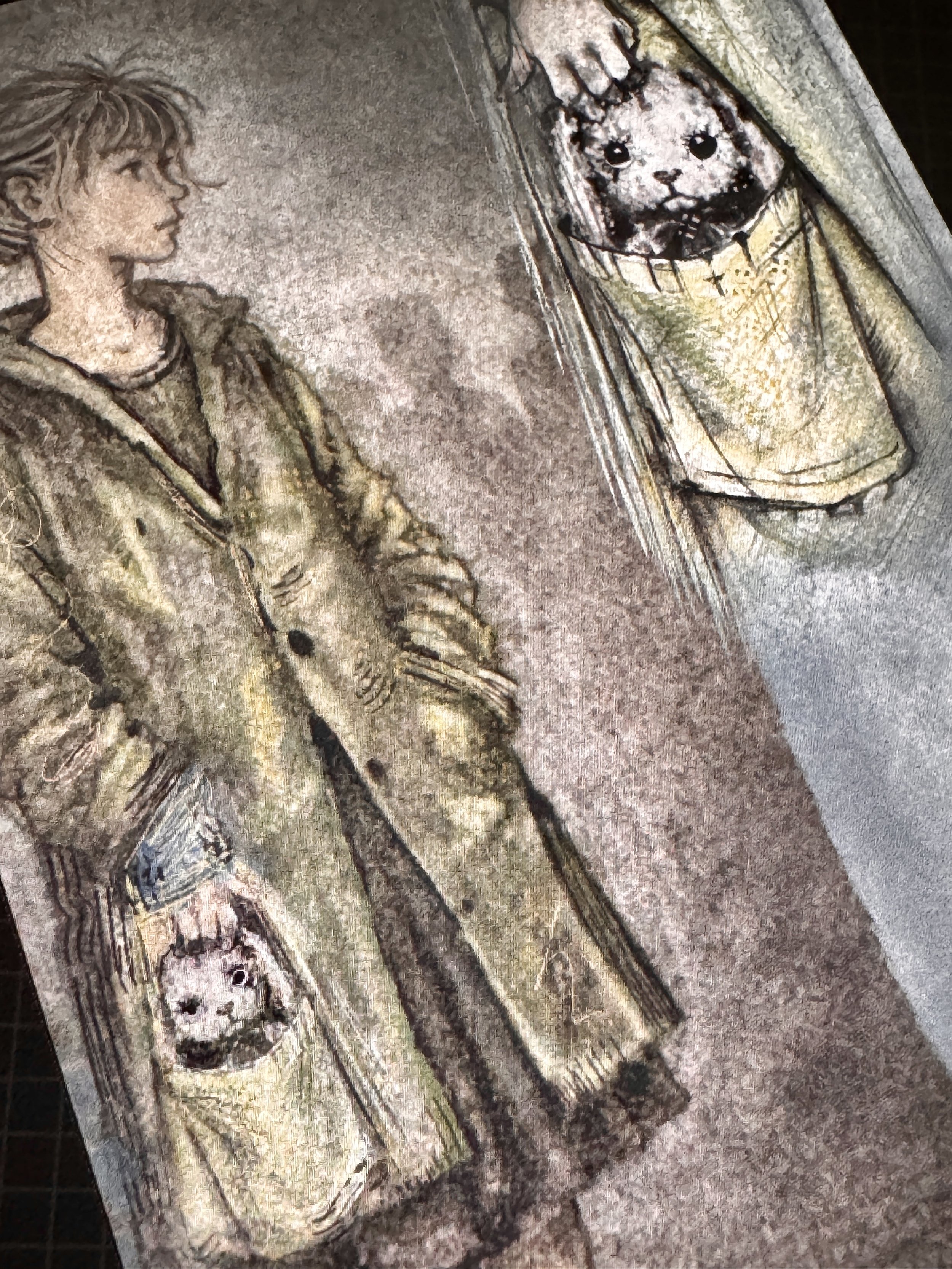
The book was developed as an illustrated work from the beginning. The drawings are part of the atmosphere of the story and another way into Emily's experience of the carnival.
Beneath the Tent
What happens when watching becomes participation?
The carnival does not survive on tickets alone. It survives on attention.
The audience does not believe it has come to hurt anyone. People have come to laugh, marvel, applaud, and go home.
Emily begins to understand that this innocence does not make them separate from what happens in the ring.
It only has to keep watching.
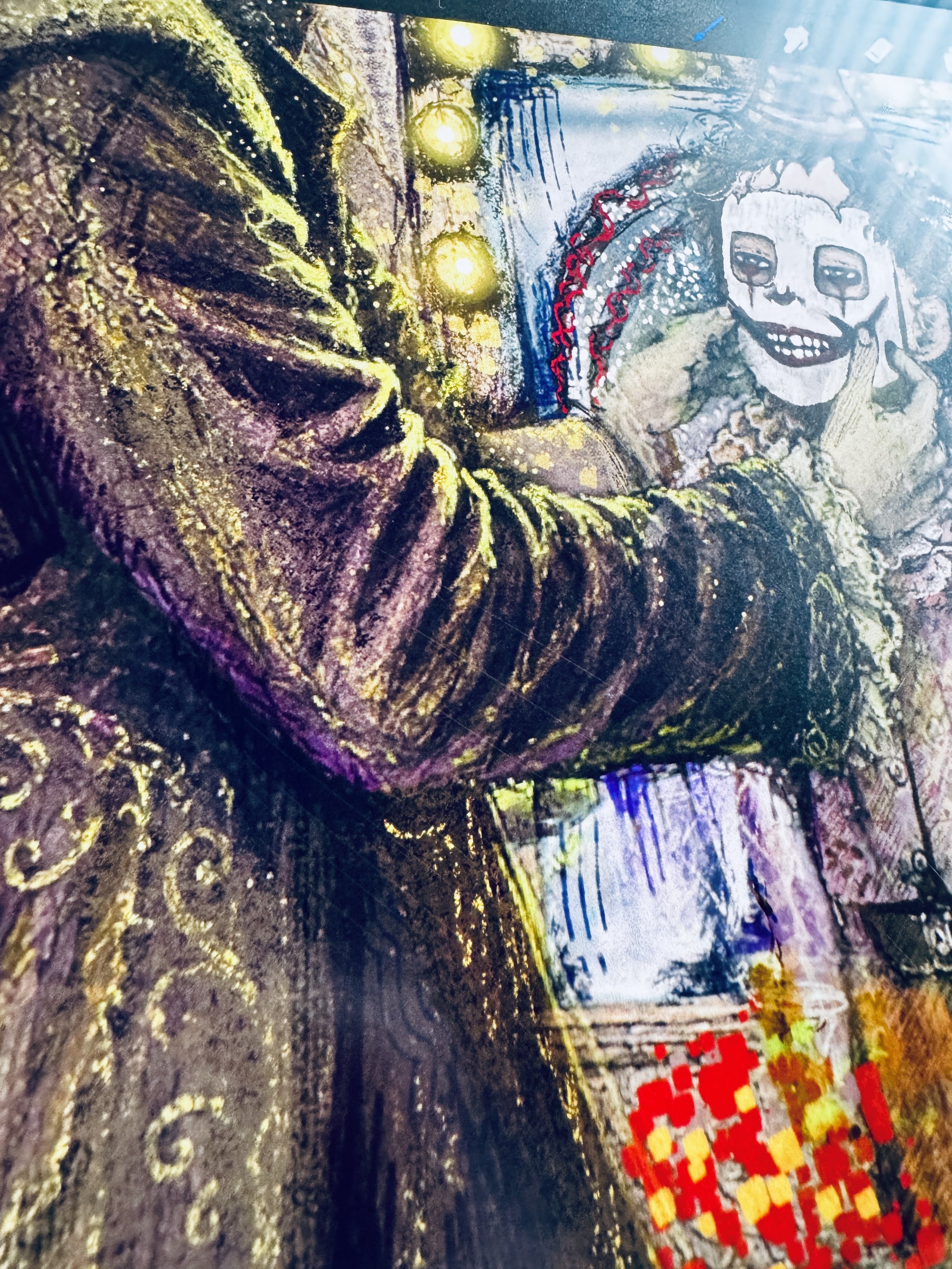
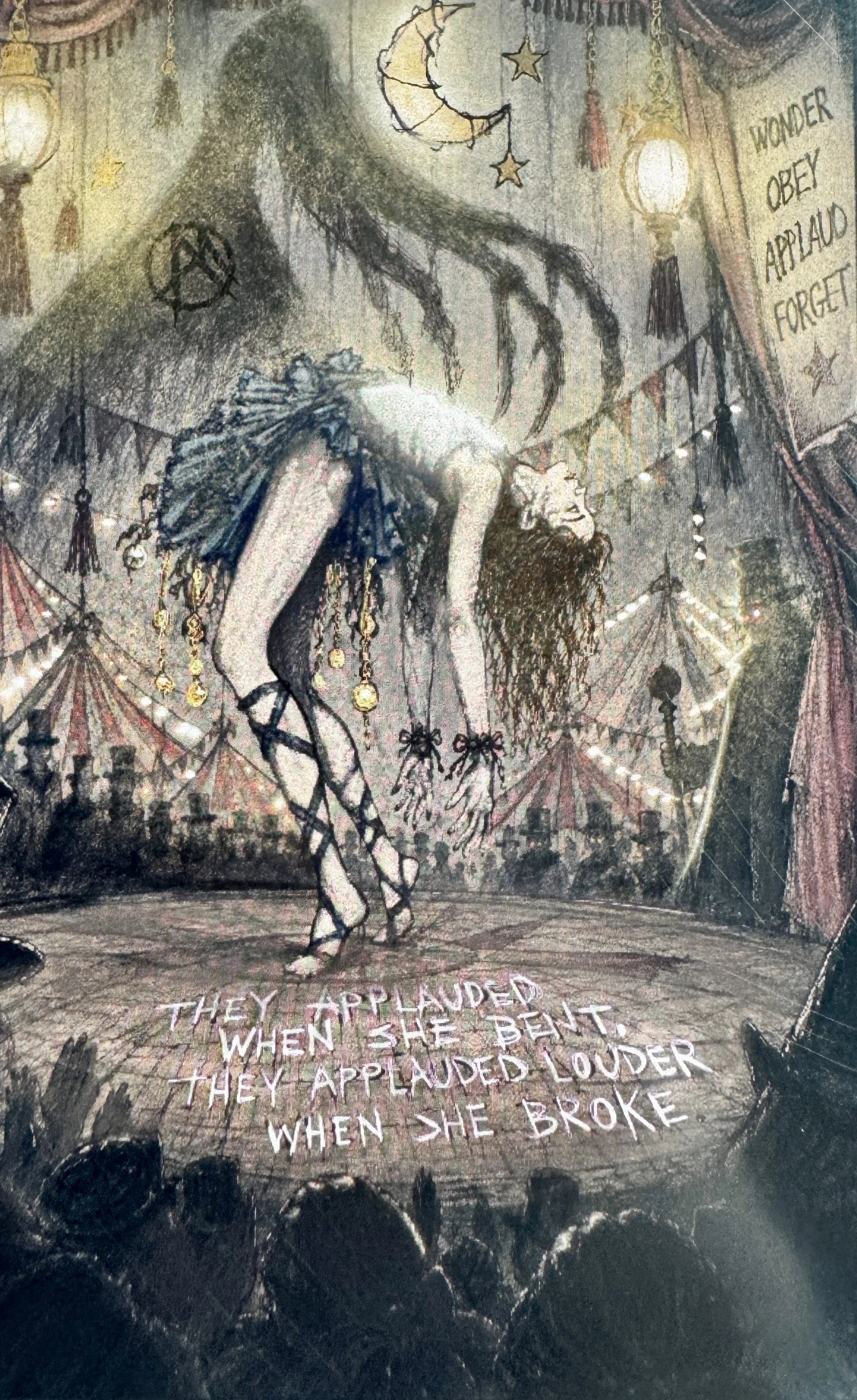
The applause does not stop when the performance becomes painful.
First Edition
The gates aren't open yet. But you can be first in line.
Reserve your place in the first audience.
The Day the Carnival Came is still being illustrated and prepared for publication.
Join the First Edition list for early preorder access, new artwork, publication updates, and a place among the first readers invited inside.
No payment required. No obligation to purchase.
First Edition members will be notified before public preorder opens.
You saw the carnival before everyone else did.
The Ringmaster
Francesco
Francesco does not need to raise his voice.
He explains the rules calmly. He offers choices. He speaks about balance, order, protection, and what must be done to keep the carnival functioning.
Emily slowly realizes that his greatest strength is not intimidation. It is his ability to make an unacceptable system sound reasonable.
He does not need everyone to agree with him. He only needs the show to continue.
The Day the Carnival Came
Some shows only work because no one interrupts them.
Purple Inkwell Studios