A chapter is missing.
Let’s build
a new one.
Somewhere in the archive, a chapter has gone missing. Your job is to study the clues and learn how comics are made so you can create a new chapter of your own.
Ages 9 and up · Neurodivergent friendlyWhat to do first
- Read the missing clue
- Look at the sample pages
- Follow the six training steps
- Try the worksheet below
Simple supplies are enough
You can go one step at a time
You do not need to be perfect. Rough sketches are welcome. Stick figures count. You can change your ideas as you go.
You are not trying to copy a lost chapter exactly. You are learning how to rebuild story from clues, pictures, and page choices.
“The garden was still above the city. Below it, the rails hissed and the lights flashed. Something in the pattern felt wrong.”
This is the piece that survived. It gives us mood, setting, and a problem.
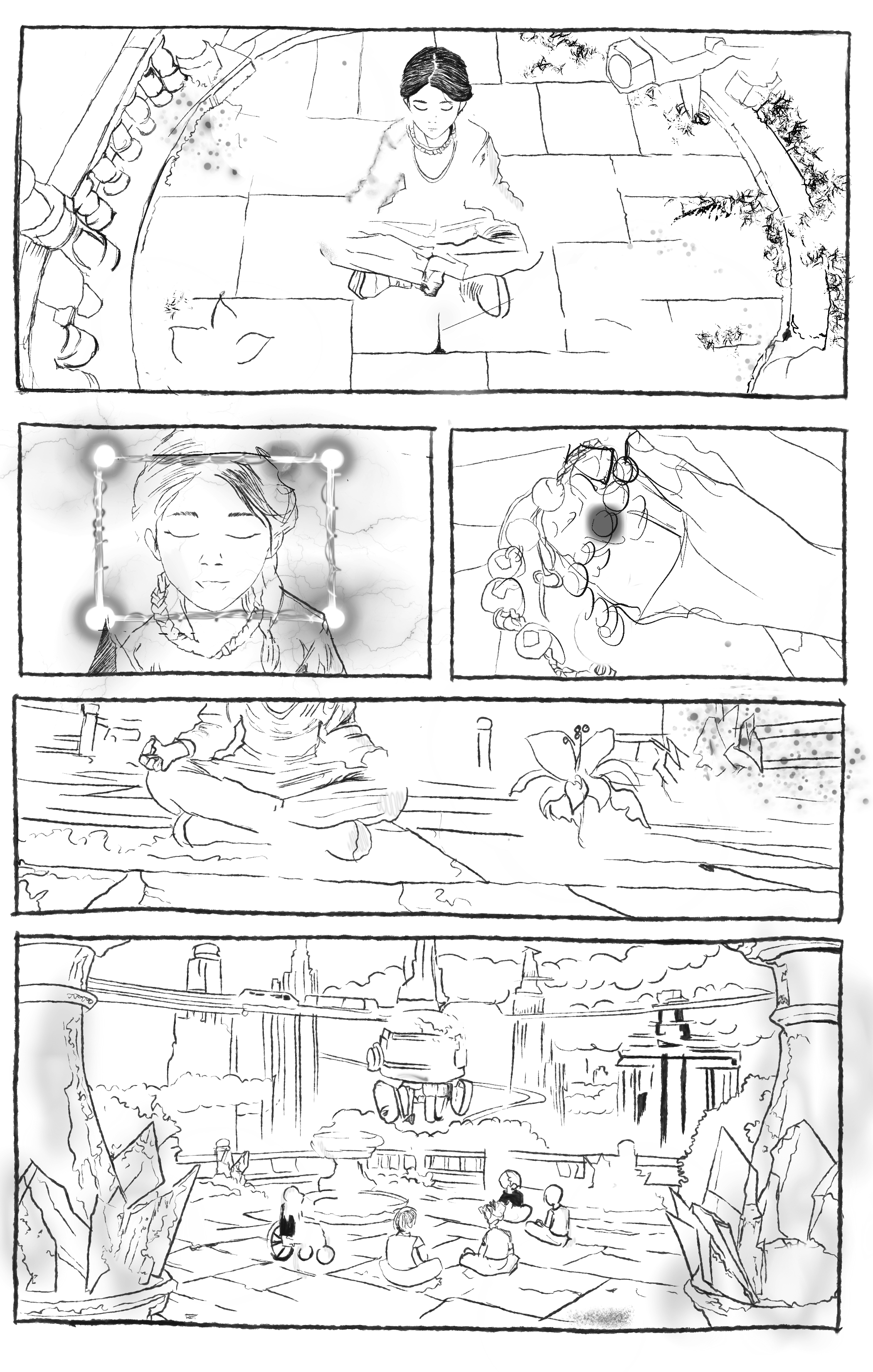
Start with a wide panel of the garden above the city. Show the calm first. Then show one detail that feels strange or broken.
You do not draw every word. You choose the parts that help the reader feel and understand the moment.
Pictures tell story
Pictures can show place, mood, action, clues, and feelings. In comics, the art is part of the storytelling.
Pages have rhythm
Big panels, small panels, and page turns help guide the reader. The way a page is arranged changes how the story feels.
You can rebuild a story
Even if part of a story is missing, you can use what remains to create something new and strong.
Find the clues
Read the chapter or story piece. Look for the most important parts.
Find the moments that help you understand the world, the feeling, and the problem.
Notice the world
Look at the place where the story happens. Notice symbols, objects, colors, shapes, and mood.
These details help the world feel real.
Choose what matters most
You do not need every detail. Keep the parts that help the story make sense and feel strong.
Some parts can be shortened. Some parts can be left out.
Put the story in order
Decide what happens first, next, and last. Think about what the reader should discover along the way.
Good page flow helps the story feel clear.
Sketch the pages
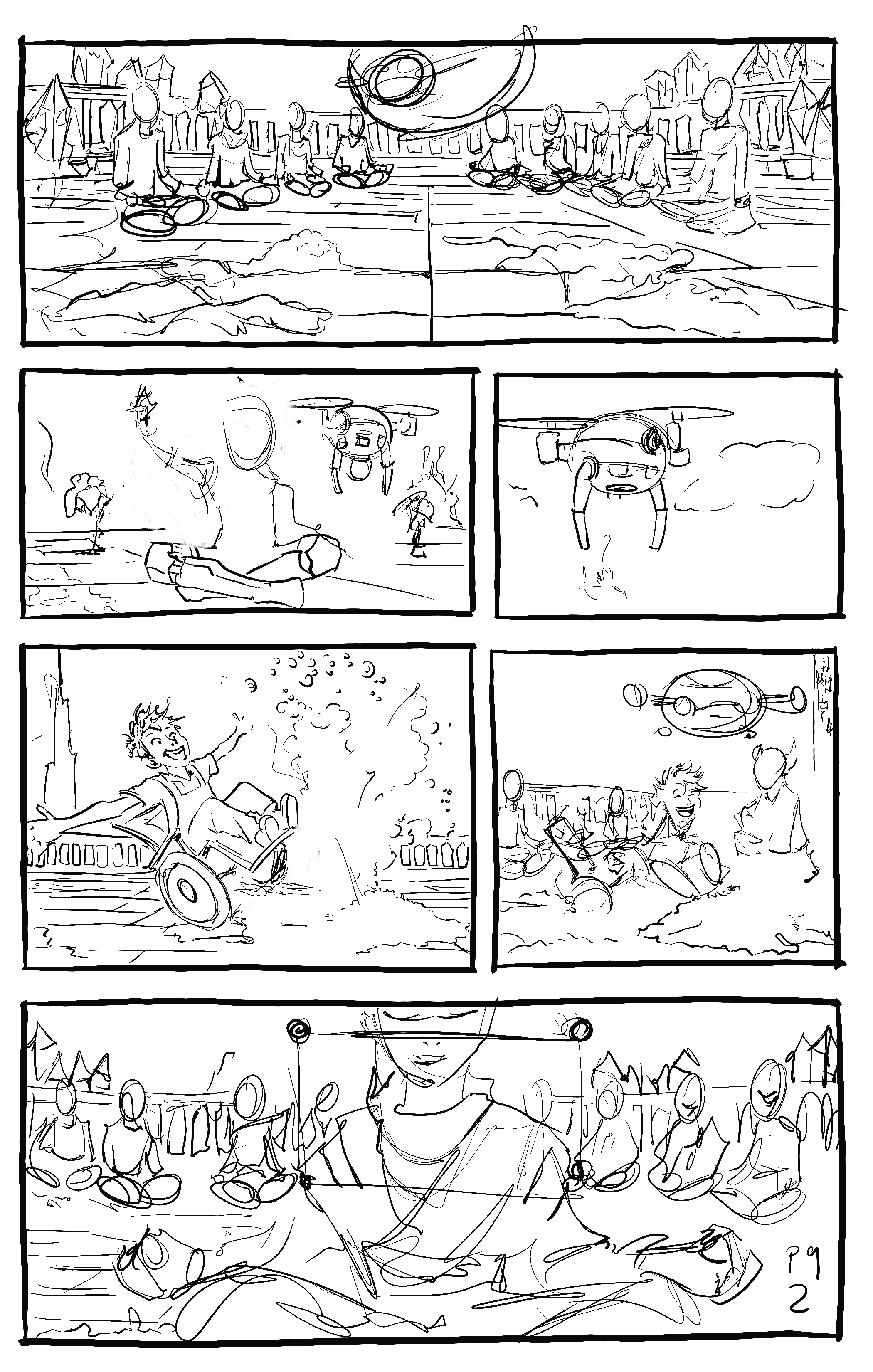
Make small rough page plans. These are called thumbnails.
They do not need to be pretty. They help you think.
Add words carefully
Add dialogue or captions only where the pictures still need help.
Sometimes fewer words make the story stronger.
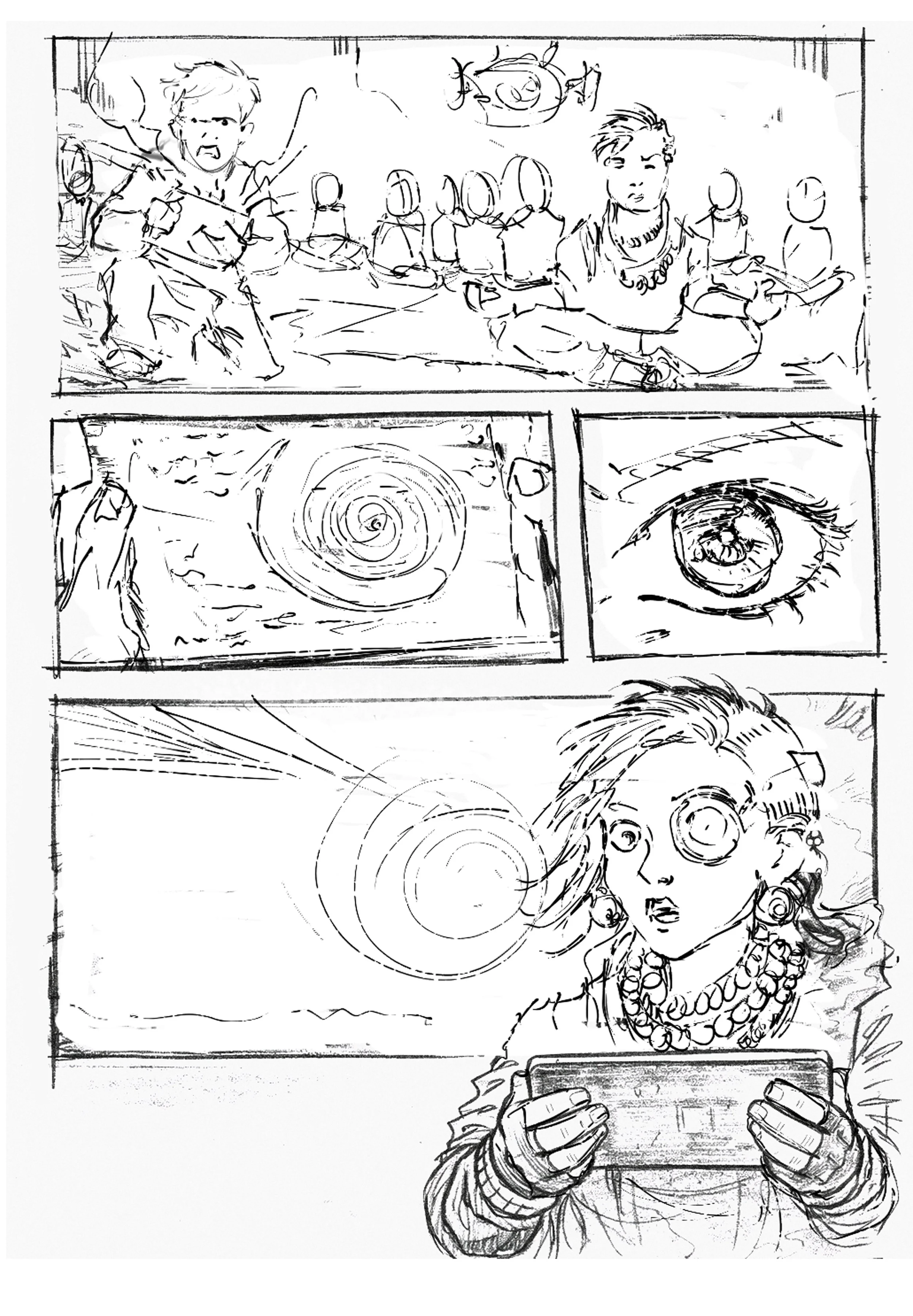
These rough pages show how planning works. They are not finished art. They are thinking pages.
You do not have to draw everything
Choose the parts that matter most. A strong story does not need every detail.
Messy planning is still good planning
Rough sketches help you think. They do not need to look finished.
Silence can tell story too
Not every panel needs words. Sometimes a quiet image is stronger.
Your version can still be true
You are not copying. You are creating from clues, and that is real storytelling.
1. What is the clue?
Write the story piece you are using, or describe the clue in your own words.
2. What matters most?
Pick the most important things the reader needs to feel or understand.
3. Put the story in order
Decide what happens first, next, and last.
4. Sketch your page ideas
These can be tiny and rough. Stick figures are welcome.
Sample clue
“The garden was still above the city. Below it, the rails hissed and the lights flashed. Something in the pattern felt wrong.”
What matters most
Simple page order
Why this works
The reader first understands the place. Then they notice movement. Then they discover the strange detail. That order helps the chapter feel clear and dramatic.
This activity works well for classrooms, home learning, comic clubs, and creative workshops. Learners do not need advanced drawing skills to succeed.
You can invite discussion by asking what matters most in the clue, what the page should reveal first, and how the pictures can carry story even without many words.
Comic Cadet
Chapter Rebuilder
Indovia Archive Division
You rebuilt a missing chapter.
That means you practiced one of the most important parts of storytelling. You studied a clue, chose what mattered, planned the order, and turned ideas into pages.
You do not need perfect art to be a real story builder. You need attention, imagination, and the courage to begin.
- Read the clue
- Choose what matters most
- Plan the order
- Sketch the page
- Build the chapter
Ready to begin your chapter?
Jump to the activity section and start building your own comic page one piece at a time.